
Choosing a kitchen countertop is arguably the most exciting part of a home renovation. It’s the crown jewel of the kitchen, the place where you’ll roll out roti dough, prep festive Rendang, and gather for late-night chats.
However, the sheer volume of materials and technical jargon can feel like a maze. In Malaysia, where our high-heat cooking and humidity put extra stress on surfaces, choosing the right supplier is just as important as choosing the right stone.
A truly professional supplier, like Aurastone, acts as your advocate. They bridge the gap between your Pinterest dreams and the practical realities of fabrication and installation. To ensure your small condo kitchen renovation is a success, here are the 10 essential questions you must ask your countertop supplier before signing on the dotted line.
1. What is your actual experience with Malaysian kitchens?
Longevity in the industry signifies stability and a deep understanding of evolving design trends.

- How long have you been in business? Established companies often have proven histories and reliable sources for materials.
- Can I see your portfolio? Ask for examples of past work in local homes to see if their craftsmanship aligns with your aesthetic.
- Are you insured? This is non-negotiable. Ensure they carry general liability insurance to protect your property during installation.
- Check reviews: Google ratings are aplenty for established suppliers. Check the latest reviews about your supplier, via online or word of mouth, if any.
2. Which material best fits my lifestyle and my heavy cooking?
The typical Malaysian household are heavy kitchen users. Your supplier should be a guide, not just a salesperson, in recommending the right countertop for your home.
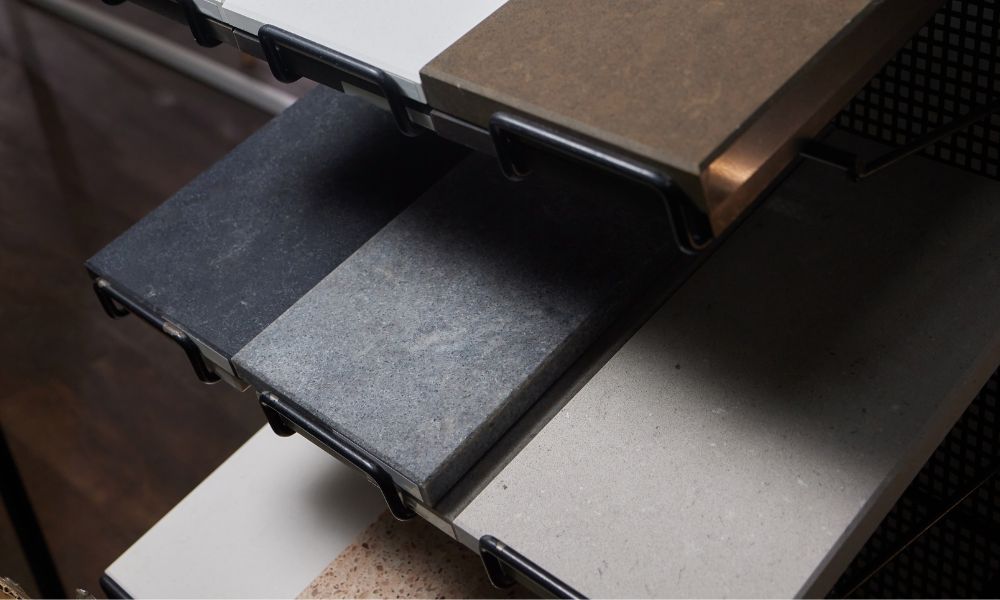
- What do you specialize in? Some suppliers excel in natural stone (granite, marble), while others specialize in engineered materials like quartz and sintered stone. Understanding their specialisation will help you discern their recommendation.
- What are the pros and cons of each material? Natural marble is a delicate diva prone to etching from acidic food, while sintered stone is a wok-proof industrial powerhouse that handles 1,200°C heat. Engineered quartz is non-porous and durable, making it a popular modern choice for its low maintenance.
- Can I see the full slab? Never choose based on a tiny sample. Veined materials have unique patterns that only a full slab can reveal.
3. How do you handle fabrication and quality control?
The transformation from a raw slab to your finished countertop requires high-tech precision.
- Is fabrication in-house? In-house fabrication usually allows for better oversight and quality control.
- What technology do you use? Modern suppliers use digital or laser templating for precise measurements, which significantly reduces installation errors compared to manual measuring.
- Can I approve the ‘cut layout’? For stones with heavy veining, ask to see the template on the slab before they cut. This ensures the most beautiful patterns end up on your kitchen island and that the veining flows correctly across seams.
4. What exactly is included in my quote?
Financial transparency is the hallmark of a reputable supplier. A cheap quote often hides missing costs.
- Is it itemised? Your final quote should clearly include the material, fabrication (cutting and polishing), delivery, professional installation, and even the demolition of your old countertop if necessary.
- Are there hidden costs? Ask upfront about charges for complex edge profiles, sink cutouts, or additional seams.
- What are the payment terms? Typically, you’ll pay a deposit upon ordering and the balance once the installation is complete.
- What is your policy on change orders or revisions? If you need to make changes after the order is placed, understand the supplier’s policy on change orders. This should outline how changes are documented, their impact on cost and timeline, and the approval process, ensuring clarity throughout the project.
5. How do you handle seam placement, especially for large islands?
Seams are often unavoidable, particularly for large kitchen islands or sprawling L-shaped layouts. However, a skilled supplier will have a plan to make them nearly invisible.
- Aesthetic flow: For materials with heavy veining like marble or certain granites, ask how they ensure the pattern flows naturally across the join.
- Placement: Inquire where the seams will be located. Ideally, they should be placed at the weakest points, like the sink cut-out, with extra support.
- Approval process: You should ask if you can view the slab after templating to approve the cut layout, ensuring the most beautiful sections of the stone are in prominent areas rather than hidden by a seam.
- Precision technology: Inquire if they use CNC routers or waterjets, as this modern technology allows for tighter, cleaner joins compared to manual cutting.
6. What is your process for installation day?
The installation is the culmination of your renovation journey.

- What is the lead time? Ask for the estimated time between the final measurement (templating) and the actual installation so you can coordinate with your plumber or contractor.
- Are the installers employees or outsourced? In-house teams often have a deeper commitment to the company’s quality standards than external subcontractors.
- How do you protect my home? A professional team will use floor coverings and cabinet protection to safeguard your existing furniture and fixtures during the process.
7. What preparation is required in my home before the installers arrive?
A smooth installation day depends on clear communication regarding home logistics.
- Pre-installation checklist: Ask for a specific checklist of what you need to do, such as clearing existing counters, ensuring easy access to the kitchen, and protecting your floors. Proper preparation minimizes delays and potential damage during the installation process.
- What are your delivery and installation hours? Clarify the operational hours for delivery and installation to ensure you can be present or arrange for access. Knowing the estimated duration helps you plan your day and communicate with family members or neighbours if needed.
- For condo dwellers: This involves getting the permit and approval from the condo’s Management Office for installers to come in. In most cases, a refundable deposit has to be paid to the management office before the renovation can start.
8. What maintenance is required to keep it hygienic?
For many Malaysian homeowners, hygiene and purity of the prep surface is paramount. In Malaysia’s humidity (80%+), countertops can harbour millions of microbes.
- Daily routine: Ask if the stone is non-porous (like sintered stone) to prevent biofilm (a sticky layer of bacteria and grease) from developing on your countertop.
- The ‘kunyit’ protocol: Ask for the best way to remove turmeric stains without damaging the finish.
- Chemical tolerance: Ask if the stone can handle deep sanitization without jeopardising the resin, which is a common risk with quartz.
- Purity: Ensure the material doesn’t absorb food particles, keeping your kitchen wholesome and pure. This is especially important for Muslim families, where halal practices are part of life.
9. What happens if I accidentally damage the surface?
No matter how durable surfaces can be, they sometimes suffer accidents.
- Repair services: Ask if they offer refinishing or repair services. For example, solid surfaces can often be sanded down to remove scratches.
- Chip repair: Inquire if the supplier offers repair services for chipped or cracked edges, which are the most vulnerable points of sintered stone.
10. What are your policies for warranties and after-sales support?
A good relationship shouldn’t end the moment the stone is fitted. Your investment should be protected long after the installers leave your home.

- Warranty specifics: Clarify the difference between the manufacturer’s warranty (defects) on the stone and the supplier’s warranty on the workmanship (installation and seams).
- Resealing guidance: If you choose natural stone like granite, ask how often they recommend re-sealing (typically every 1 – 3 years) and if they provide this service to help maintain the stone’s long-term value. Check if the supplier provides a yearly “Water Test” service.
Conclusion: A Partnership for Your Home
Investing in a new kitchen countertop can significantly boost your home’s appeal and even reduce the time it spends on the market by up to 20 days. But beyond the resale value, it’s about the daily joy of a beautiful, functional space.
By asking these 10 proactive questions, you move beyond a simple transaction and forge a partnership built on trust. Whether you are looking for the indestructible nature of sintered stone or the versatility of premium quartz, the right supplier will ensure your investment withstand the test of time.
At Aurastone, we believe that by treating your stone with the respect it deserves, it will remain the centrepiece of your family memories for decades to come.