
Planning a kitchen renovation in Malaysia is an exciting journey, whether you are moving into a new condo in Kuala Lumpur or upgrading a classic terrace house in Johor Bahru. However, the transition from picking a beautiful slab at the showroom to seeing it installed in your home depends on one critical factor: Precision!
At Aurastone, we’ve seen how a few missing millimetres can lead to delays or costly adjustments. To help you prepare for a seamless installation, we’ve put together this comprehensive guide on how to measure your kitchen top and what to look out for in a local context.
The High Stakes of Precision: Why Accurate Measurement Matters
In the world of interior design, there is a common saying: Measure twice, cut once. But when it comes to premium surfaces like quartz, marble, or sintered stone, we prefer the rule: Measure three times, because you only get to cut once.
Unlike wooden furniture or drywall, stone is an unforgiving medium. Once a slab enters the fabrication stage, it undergoes high-pressure water jet cutting and polishing based on the dimensions provided.
Here is why precision is the most critical step of your renovation:
1. Eliminating On-Site “Surgery”
Standard Malaysian terrace houses and condos often have walls that aren’t perfectly square (90 degrees). If your measurements assume a perfect rectangle but your wall has a slight curve or a wave, the stone will not sit flush.
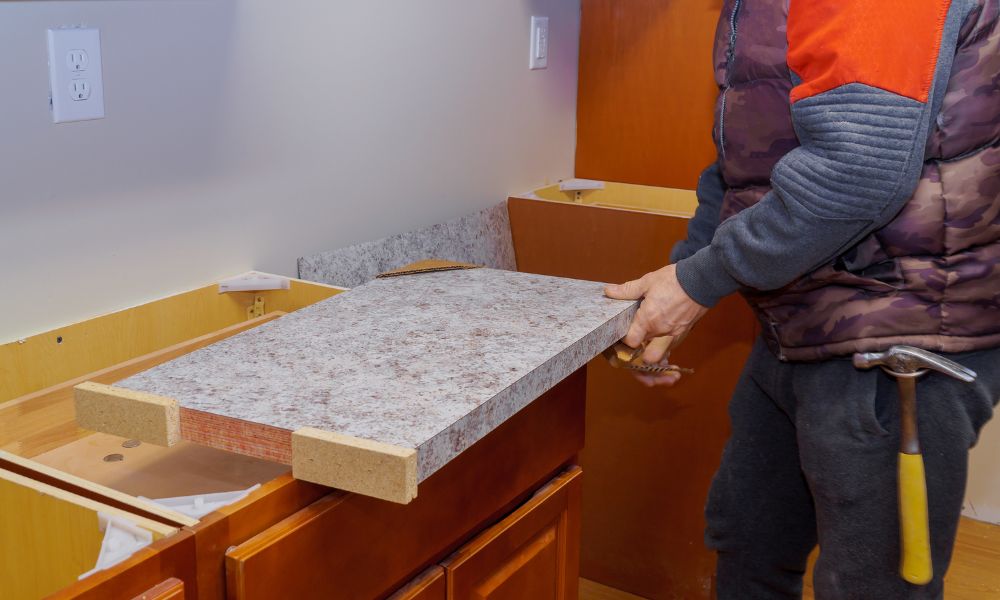
If the stone is even 5mm too long, installers might have to grind the stone inside your home. This creates an immense amount of fine silica dust that can settle into your air conditioning units and cabinetry, requiring professional cleaning.
A perfect measurement allows the slab to drop in seamlessly, keeping your home clean and the installation quiet.
2. Structural Integrity and Stress Points
Stone is incredibly strong when supported, but it can be brittle if there are gaps.
If your measurements for an island or breakfast bar are off, you may end up with an unsupported overhang. Without the correct calculations, a heavy stone top can tip or, worse, develop stress cracks over time.
The narrow strips of stone in front of and behind your sink undermounting or hob cut-outs are the most fragile parts of the countertop. Precise measurements ensure these bridges are wide enough to maintain structural integrity while still fitting your appliances.
3. Cost Efficiency and Waste Reduction
Premium stone is sold by the slab or by the running foot. Accurate measurements prevent you from buying a second slab just because the first one was cut 10cm too short due to a measuring error.
When we have the exact dimensions of your kitchen, our team can nest the pieces on the slab to minimize waste. This not only saves you money but is also a more sustainable way to renovate your home.
4. Flawless Aesthetics (The Invisible Joint)
For L-shaped or U-shaped kitchens, the joint or seam is where the quality of measurement truly shows. If the base cabinets aren’t measured for levelness and length accurately, the two pieces of stone won’t meet perfectly. This results in a thick, ugly epoxy line. Accurate measurements ensure a tight joint that is nearly invisible to the naked eye.
The Essential Kitchen Renovation Checklist
Before you pull out the measuring tape, ensure your base cabinets (the lower kitchen units) are fully installed and levelled. Never measure for a countertop if the cabinets are still being moved around.
1. Measuring the Length and Depth
Start by measuring the length of the base cabinets along the wall. Always measure at the back (against the wall) and the front of the cabinet. Walls in Malaysian homes are rarely perfectly straight. If there is a discrepancy, record the longest measurement.
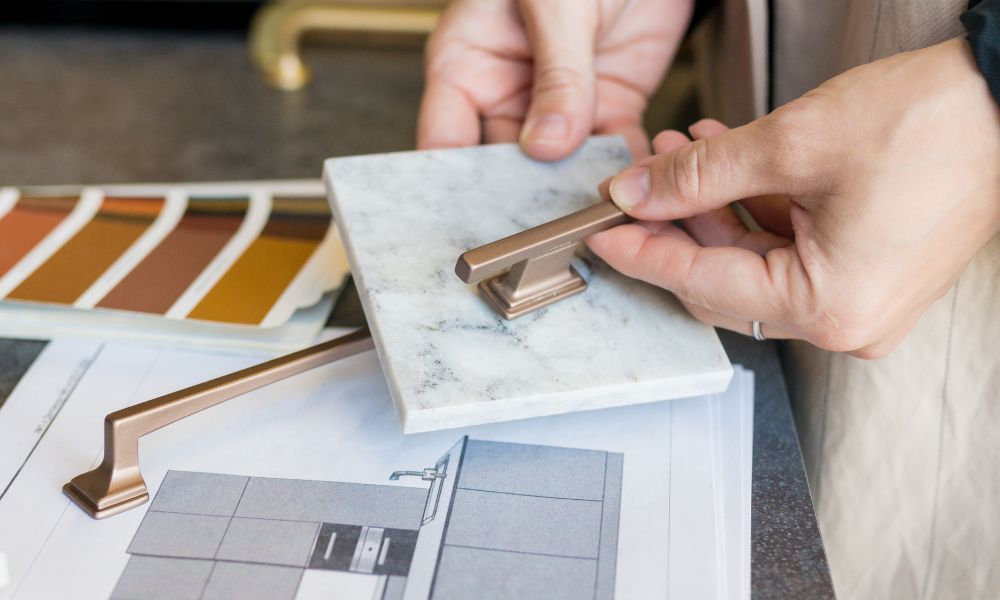
Standard Malaysian kitchen cabinets are usually 600mm deep. However, your countertop needs to overhang the cabinet doors slightly to prevent liquid spills from trickling down into your drawers. A standard overhang is typically 20mm to 30mm.
2. Sink Undermounting
In Malaysia, the leakproof undermount sink is the gold standard for modern kitchens. This is where the sink is installed underneath the countertop, creating a seamless look that allows you to wipe water and crumbs directly into the basin.
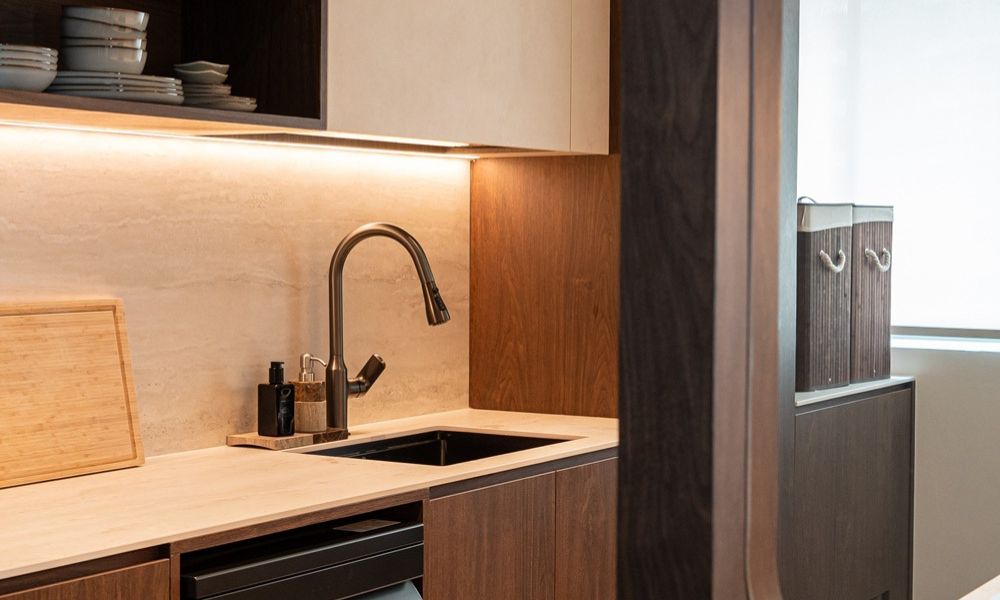
You need the internal width of the cabinet carcass where the sink will sit. If you bought a massive double-bowl Blanco or Hafele sink, but your cabinet is only 600mm wide, it won’t fit.
Provide your fabricator with the physical sink or the technical drawing (template) provided in the box. This ensures the stone is cut to the exact radius of the sink corners.
3. Hob Cut-Outs
Malaysian cooking often involves high heat and heavy woks. Whether you are using a glass-top gas hob or a sleek induction cooker, the hob cut-out is a critical part of your countertop installation guide.
Most hobs require a specific clearance from the back wall to prevent the backsplash from cracking due to heat expansion. Don’t just measure the top of the hob. Flip it over and measure the housing (the part that actually drops into the hole). Better yet, keep the user manual handy. It will list the cut-out dimensions specifically.
How to Measure Kitchen Top for Different Layouts
L-Shape or U-Shape Kitchen
If your kitchen has corners, you need to account for the joint. Stone slabs come in specific lengths (often around 3 metres). If your counter is longer than that, there will be a visible seam. Plan the seam away from the sink area to prevent water from eventually seeping into the joint.
Kitchen Island
For those with an open-plan condo in Mont Kiara or Penang, the island is the centrepiece.
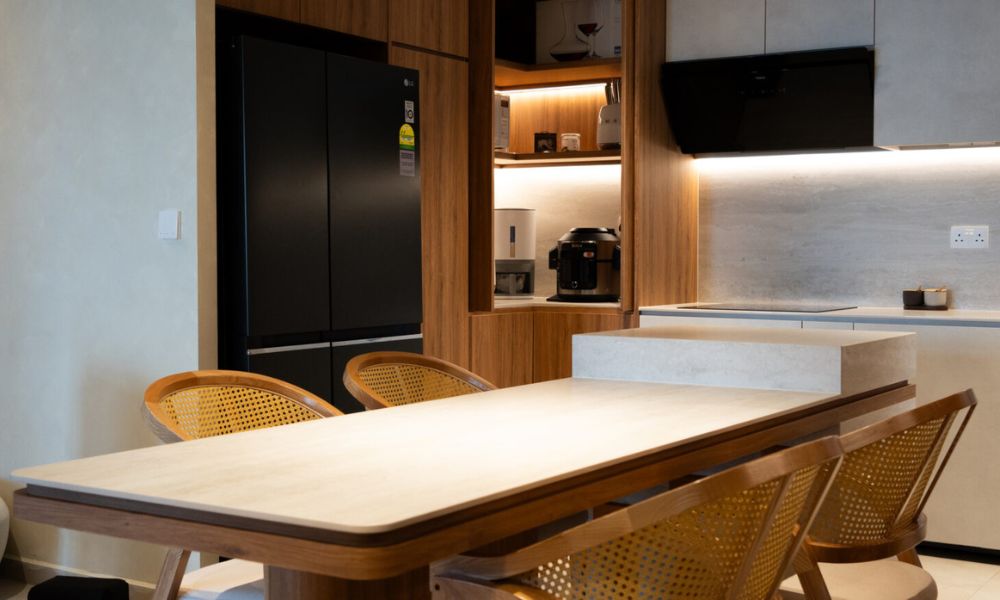
If you want waterfall edges where the stone flows down the side of the cabinet to the floor, you must measure the height from the top of the cabinet to the finished flooring.
Remember to mark where pop-up power sockets will be located so the holes can be pre-drilled.
Preparing for Installation Day
Once your measurements are recorded and the order is placed, there are a few final steps to ensure the installation team can do their best work:
1. Clear the Path
Ensure the walkway from the loading bay or driveway to the kitchen is clear. Stone slabs are incredibly heavy and require a wide turning radius.
2. Verify Levelling
Use a spirit level on your base cabinets one last time. If the cabinets are tilted, the stone may crack under its own weight over time.
3. On-Site Decision Maker
Ensure someone is home to confirm the location of the tap hole. Once the hole is drilled through the quartz or granite, it cannot be undone!
Summary of Countertop Pre-Installation Checklist for Homeowners
| Task Checklist | |
| Base cabinets are installed and levelled | [ ] |
| Sink is purchased and template is available | [ ] |
| Hob is purchased and cut-out dimensions are verified | [ ] |
| Fridge and tall cabinets are in place (to check for side clearances) | [ ] |
| Locations for undermounting and hob cut-outs are marked | [ ] |
Conclusion
Measuring for a countertop might seem daunting, but following this countertop pre-installation checklist takes the guesswork out of the process. By understanding the nuances of how to measure kitchen top surfaces and accounting for local preferences like undermount sinks and specific hob clearances, you set the stage for a beautiful, durable kitchen.
Ready to transform your Malaysian kitchen? At Aurastone, we specialise in high-quality surfaces that stand the test of time and pride ourselves on a right-first-time approach. Bring your measurements to our showroom, and let’s find the perfect slab for your home.