
You’ve invested thousands of Ringgits into a premium quartz or sintered stone countertop. It looks sleek, modern, and expensive. But six months later, you notice a tiny black speck in the corner where the stone meets the wall. Then another. Within weeks, the beautiful white silicone seal around your sink is covered in stubborn, un-scrubbable black mould.
In Malaysia’s 80% – 90% relative humidity, mould isn’t just a nuisance, it’s an environmental certainty. If your kitchen isn’t ventilated correctly, the silicone sealant becomes a breeding ground for Stachybotrys chartarum (black mould).
Today, we’re going deep into the science of why this happens in Malaysian homes and the strategies to keep your countertop seals looking showroom white forever.
The Science of the Black Spot: Why Malaysia?
Mould needs three things to thrive: Moisture, a food source, and stagnant air. In a typical Malaysian kitchen, we provide all three. Our wet kitchens are often enclosed with limited airflow. When we boil a pot of sup tulang, the steam rises and settles on the cool silicone seals. Over time, tiny particles of cooking oil, food splashes, and even dust settle on the silicone, providing the food the mould needs to grow.
Because silicone is flexible and slightly porous at a microscopic level, the mould doesn’t just sit on top, it grows inside the sealant. This is why you can scrub until your hands are sore and the black spots won’t budge.
The Hidden Health Crisis: Why Black Mould is More Than an Eyesore
In the humid, tropical environment of Malaysia, we are used to seeing mould. We see it on damp bread, old leather shoes, and bathroom tiles. Because it is so common, we often underestimate its danger. However, the black mould found in kitchen countertop seals, scientifically known as Stachybotrys chartarum, is a biological hazard that actively pollutes the air your family breathes while eating.
The Invisible Respiratory Attack
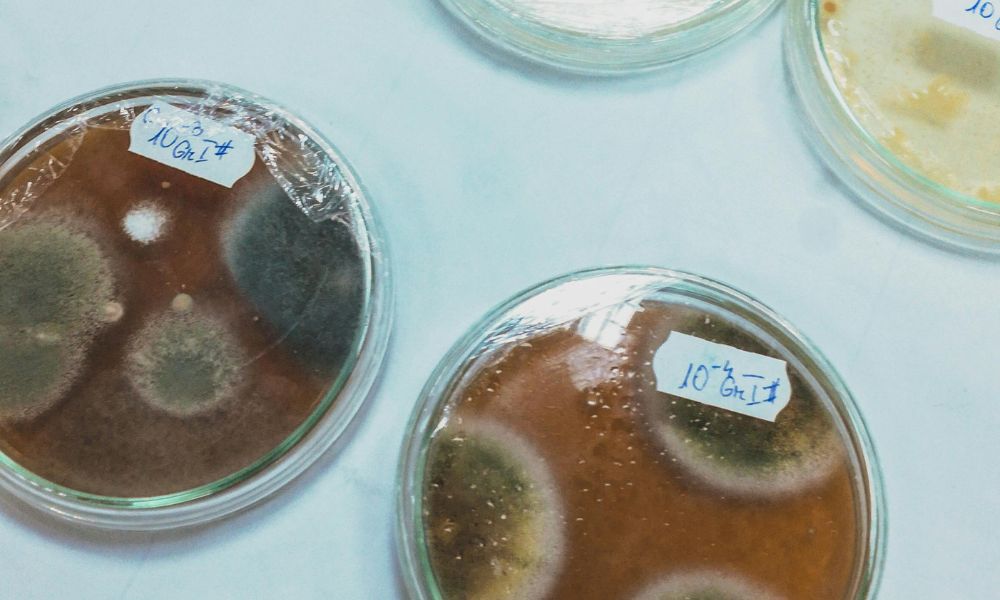
When black mould grows on your countertop silicone, it releases microscopic particles called spores and toxic chemicals known as mycotoxins.
Many Malaysians suffer from morning sinus or a persistent dry cough that they blame on the weather or air-conditioner. Often, the culprit is the mould spores from the kitchen.
For children and the elderly, these spores can trigger sudden asthma attacks. Medical research has increasingly linked “Sick Building Syndrome” in Malaysian condos to poor ventilation and hidden mould in wet kitchens.
Mycotoxins and Your Immune System
Unlike common green mould, black mould can produce trichothecene mycotoxins. These are particularly sticky toxins that can be inhaled or even absorbed through the skin if you touch the infected silicone while preparing food.
Prolonged exposure can lead to a weakened immune system, leaving you feeling constantly tired or foggy-headed. If you find yourself developing unexplained rashes or itchy eyes while spending time in the kitchen, your countertop joints might be to blame.
Food Safety Risks
In a kitchen, the danger is doubled. Because black mould is often located around the sink or food prep areas, spores can easily land on your cutting boards, vegetables, or clean dishes.

For individuals with severely weakened immune systems (such as those undergoing chemotherapy or the very young), inhaling high concentrations of these spores can lead to a fungal infection in the lungs called mycosis.
If the mould covers an area larger than 10 square feet (about 1 foot run of countertop and the wall behind it), do not attempt to clean it yourself. At this scale, the spore concentration is high enough to require professional remediation with N95 masks and industrial air scrubbers.
The Wet Kitchen vs Dry Kitchen Moisture Levels
In Malaysia, we usually have a dual-kitchen setup: Dry kitchen and wet kitchen.
The dry kitchen is usually air-conditioned or open to the living room. Mould is rare here because the air is drier and cooking is limited to light tasks.
This is the danger zone is in the wet kitchen where heavy frying, steaming, and dishwashing happen here. This is a moisture trap! If your wet kitchen is located at the back of your house (the yard area), ensure your exhaust fan has an extraction rate of at least 1,200 m³/h. A weak fan won’t pull the moisture out fast enough to prevent it from settling on your stone joints.
Prevention: Choosing the Right Anti-Fungal Silicone
Not all silicone is created equal. Many contractors in Malaysia use general purpose silicone because it’s cheap (around RM10 a tube). For a kitchen countertop, this is a mistake.
When you’re renovating your kitchen, you should insist on neutral cure, anti-fungal silicone. Unlike acetic silicone (which smells like vinegar), neutral cure won’t react with the minerals in your quartz or granite.
Additionally, you can use premium sealants like Selleys Wet Area or Dow Corning 789 contain biocides, which are chemical agents that actively kill mould spores on contact.
The Paper Towel Hack: Removing Mould Without Scrubbing
If you already have mould, don’t reach for the scraper just yet. If the mould is still on the surface, try this Malaysian homeowner secret:
- Prepare Clorox (bleach), cotton wool or paper towels, and a pair of gloves.
- Soak the cotton wool or paper towels in undiluted bleach.
- Lay the soaked towels directly onto the black silicone seal. Press them down so they make full contact.
- Leave it for 12 hours, overnight.
- Remove the towels and rinse with water.
In many cases, the bleach will wick into the silicone and kill the mould from the inside out, making the seal look brand new without the need for re-caulking.
When to Call the Pros: Replacing Your Sealant
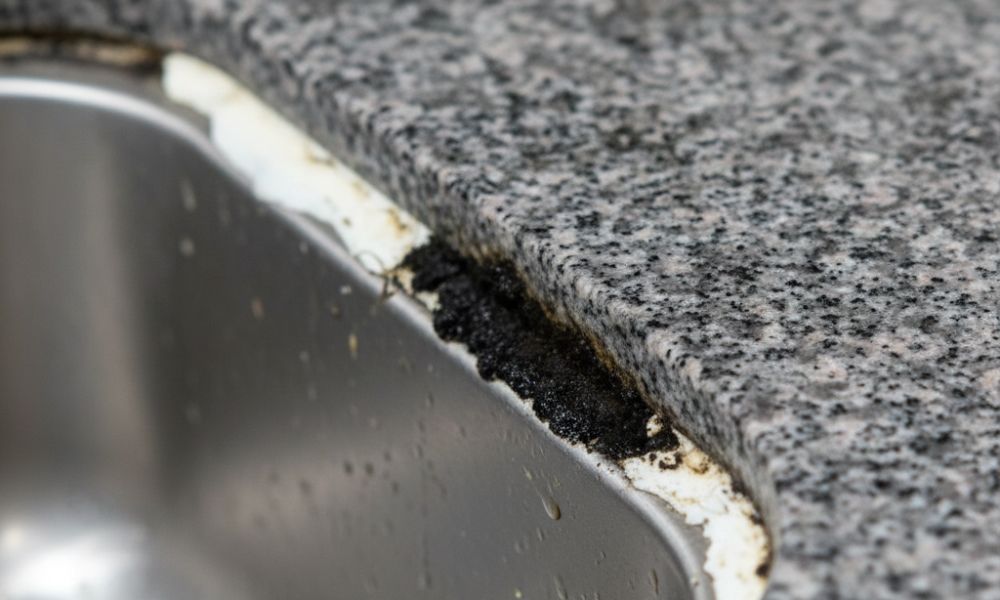
If the paper towel hack fails, it means the mould has structuralized inside the silicone. At this point, no amount of chemical will help. You need to replace it.
The Sealant Replacement Checklist:
- Use a silicone remover tool to get 100% of the old material out. If even a tiny bit of mouldy silicone remains, the new seal will be infected within weeks.
- Before applying new silicone, spray the gap with an anti-mould spray or alcohol to kill hidden spores behind the stone.
- This is where many fail. In Malaysia’s humidity, you must wait 24 hours after cleaning for the gap to be bone-dry before applying new silicone. If you trap moisture behind the new seal, the mould will grow back from the inside within a month.
Daily Habits for a Mould-Free Kitchen
Here is a daily routine we recommend to our customers:
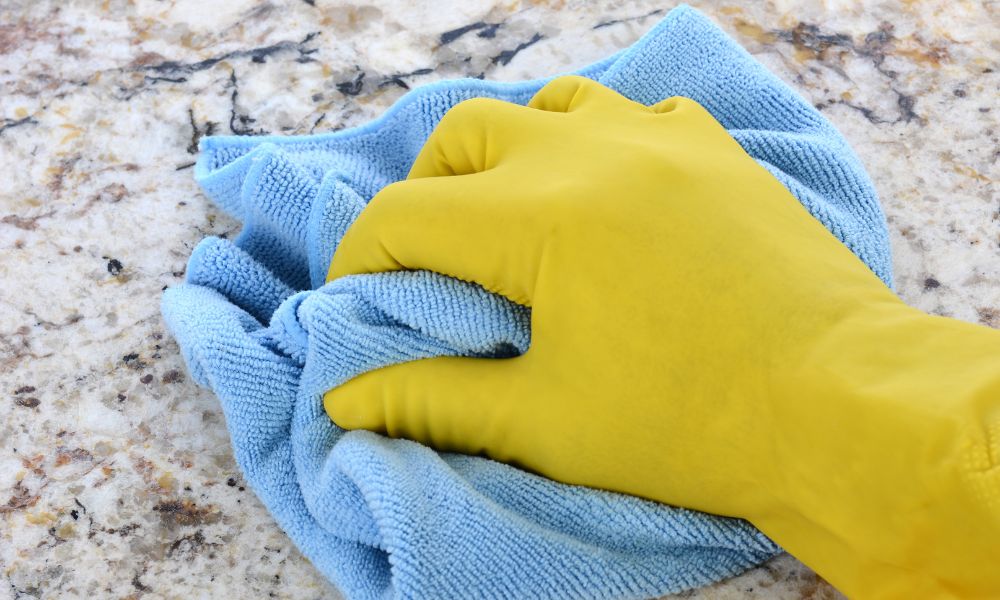
- After finishing the dishes at night, take a dry microfiber cloth and wipe the water off the silicone rim of the sink. Mould cannot grow without standing water.
- Open the windows for natural cross-ventilation for 30 minutes a day significantly lowers the dew point in your kitchen.
- Once a month, check the silicone underneath the undermount sink. This is a dark, damp area that is often forgotten until the mould has spread to your cabinets.
Conclusion: Transforming Your Kitchen into a Sanctuary of Health
Black mould is undoubtedly the enemy of a beautiful kitchen, but as we have explored, it is far from invincible. In the context of modern Malaysian homeownership, a kitchen is no longer just a place to boil water. It is a high-traffic hub that influences the air quality and overall well-being of your entire household. Ignoring a few black spots today can lead to costly structural repairs and avoidable health visits tomorrow.
By adopting a proactive strategy, i.e. choosing the right materials, ensuring mechanical and natural ventilation, and mastering the “Paper Towel Hack”, you are doing more than just maintaining an “Insta-ready” aesthetic. You are building a defence system against the tropical humidity that defines our region.
The Long-Term Value of Prevention
Investing in premium, neutral-cure anti-fungal silicone might cost an extra RM50 today, but it protects a countertop investment worth thousands of Ringgits. When you eventually decide to sell or upgrade your home, a mould-free, pristine kitchen remains one of the highest-selling points in the Malaysian property market. Prospective buyers in areas like Subang Jaya or Mont Kiara are increasingly looking for wellness-certified features, and a kitchen that breathes well is at the top of that list.
Your Next Steps for a Mould-Free Home
Don’t let mould dictate the lifespan of your renovation. Start by auditing your kitchen today:
- Touch the seals. If they feel slimy or mushy, moisture is already trapped behind.
- Check the airflow. Is your hood actually venting outside, or just recirculating the steam back into the room?
- The moment you see a black speck, use the bleach-soak method. Mould is opportunistic. Once it establishes a colony, it becomes exponentially harder to eradicate.
Ultimately, a hygienic kitchen is a happy kitchen. By taking these small, consistent steps, you ensure that your countertop remains a safe surface for preparing meals, sharing stories, and creating memories for years to come.