The year 2026 finds Malaysian homeowners more discerning than ever when it comes to kitchen renovations. The days of simply picking laminate or generic ceramic tiles are long gone. Today, the spotlight shines brightly on two high-performance materials that promise both aesthetics and durability: Quartz stone and sintered stone.
As you navigate the myriad choices for your dream kitchen, especially one built to withstand the rigours of Malaysian cooking and our tropical climate, a crucial question arises: Which of these champions is truly right for you?
Malaysia’s unique wet kitchen culture, often involving intense stir-frying, vibrant turmeric stains, and high humidity, demands a countertop that goes beyond mere good looks. Choosing the wrong material can lead to frustrating cracks, unsightly discoloration, or stubborn stains within just a couple of years.
While quartz has long been the reliable veteran, admired for its vast design options and low maintenance, sintered stone has emerged as a high-tech newcomer, boasting unparalleled resistance to heat and scratches. This comprehensive guide will dissect each material, putting them through the ultimate “kuali and kunyit” test to help you make an informed decision based on your cooking style, budget, and long-term vision.
What is Quartz Stone?
Quartz stone, often simply referred to as quartz, has been a staple in modern Malaysian kitchens for over a decade, and for good reason. It is an engineered stone made primarily from crushed natural quartz crystals, typically comprising 90-94% of the material. The remaining 6-10% consists of polymer resins, pigments, and other additives that bind the quartz particles together and create its diverse range of colours and patterns.
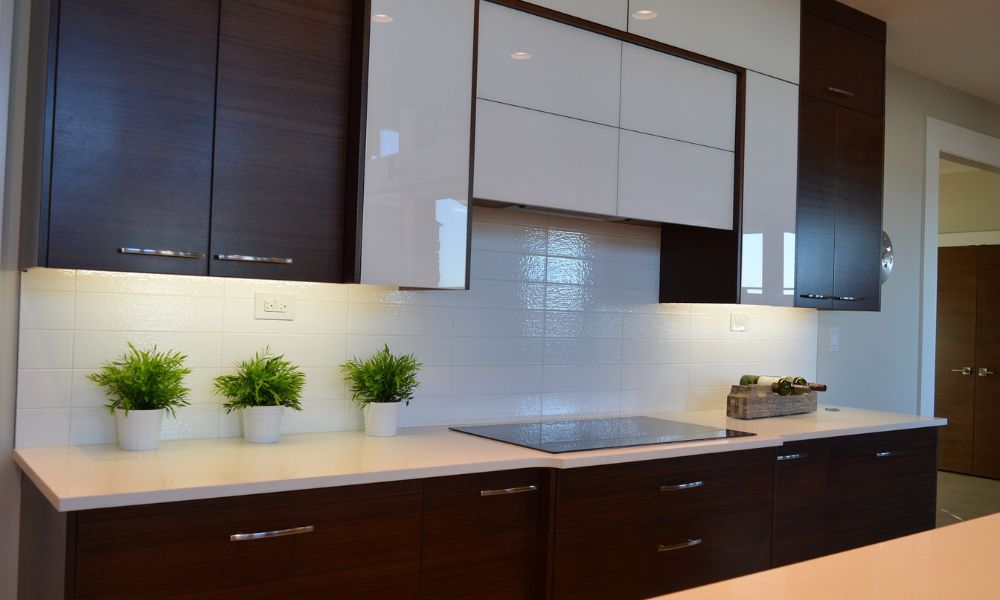
Malaysians have fallen in love with quartz for several compelling reasons. Its non-porous nature means it’s incredibly resistant to stains, a huge advantage against notorious Malaysian culprits like turmeric, sambal, and coffee spills. Unlike natural stones such as marble or granite, you don’t need to seal quartz, making it a truly low-maintenance option.
Furthermore, the manufacturing process allows for a massive variety of designs, from pristine whites to sophisticated marble-look veins and earthy, industrial tones, ensuring there’s a style to match any interior design trend in Kuala Lumpur, Penang, or Johor Bahru. Popular international brands like Caesarstone and Silestone are widely available, offering a sense of quality assurance.
However, the very thing (i.e. resin content) that gives quartz its flexibility and wide range of designs, is also its primary weakness. Resin is essentially a plastic-based material, and while it provides excellent binding and flexibility, it has a melting point. This means quartz countertops, despite being highly durable, are not entirely invincible against extreme heat.
Understanding this limitation is crucial for Malaysian kitchens where high heat is an everyday reality.
What is Sintered Stone?
Sintered stone is the cutting-edge contender that has been rapidly gaining traction in high-end Malaysian kitchens, and its popularity is set to surge further by 2026. Unlike quartz, which is resin-based, sintered stone is a manufactured material that mimics the geological processes of natural stone formation, but at an accelerated rate.
The technology behind sintered stone involves subjecting natural minerals (like silica, quartz, feldspar, and mineral oxides) to immense pressure and extremely high temperatures, often exceeding 1,200°C, in a process called sintering. This process effectively fuses the particles together without melting them, creating an incredibly dense, non-porous slab that is nearly impervious to damage. Think of it as Mother Nature’s geological processes condensed into a factory setting.
Key brands like Dekton, Mysa, and various high-quality Chinese and European imports are now prominent in the Malaysian market, offering stunning aesthetics that replicate natural marble, concrete, and even rust effects with remarkable realism.
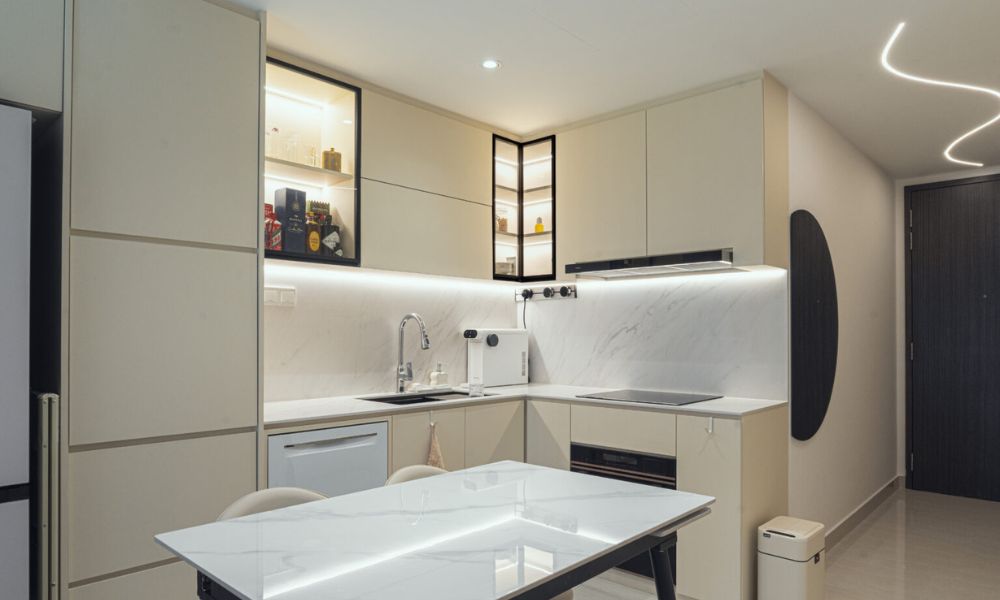
The full-body advantage means that the pattern you see on the surface usually extends through the entire thickness of the slab, providing a more authentic and durable finish compared to some engineered materials that merely have a printed top layer. Sintered stone is truly a testament to advanced material science, offering a forever countertop solution for those seeking the ultimate in performance and aesthetics.
Head-to-Head Comparison: The “Kuali” & “Kunyit” Test
When it comes to choosing between quartz and sintered stone, technical specs on a brochure are one thing, but how they perform in a busy Malaysian kitchen is another. Whether you are preparing a 3-course Kenduri or just making a quick nasi goreng, your countertop needs to survive the heat, the stains, and the occasional heavy knock.
The “Kuali” Test: Heat Resistance
In Malaysia, our cooking is fast and hot. We often move a boiling pot of rendang or a sizzling kuali directly from the stove to the counter, sometimes without a second thought.
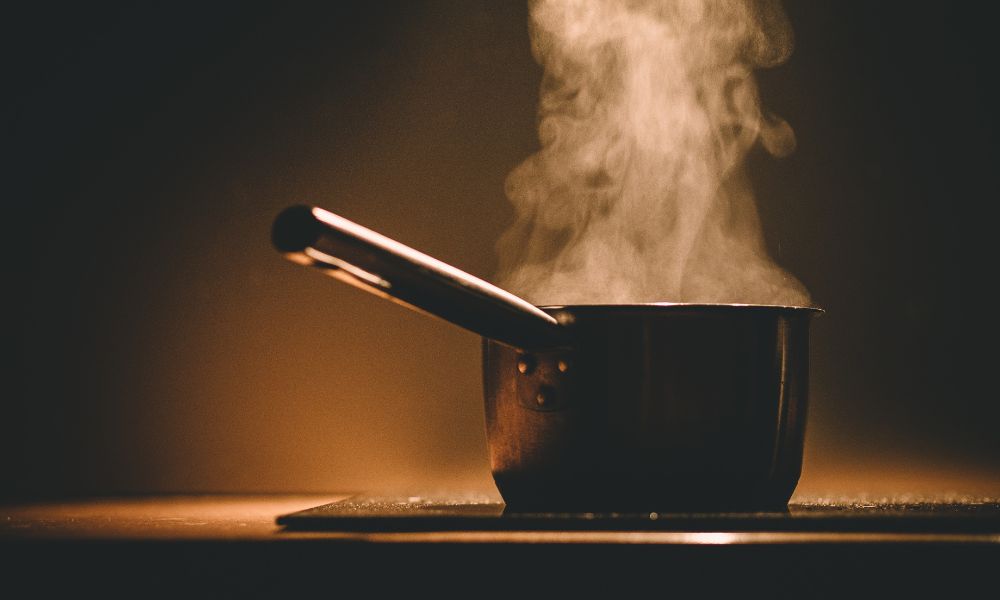
Sintered stone is fired at temperatures exceeding 1,200°C during its creation, making it practically fireproof. It remains the only common countertop material where you can technically place a hot pot, a kuali straight off the burner, or a sizzling pan directly on the surface without needing a trivet. It simply will not scorch, crack, or discolor from heat.
Quartz is tough, but it has a kryptonite, which is its resin content. Since quartz is primarily bonded with polymer resins, sudden extreme heat (known as thermal shock) can cause the resin to burn, blister, or the slab to crack. While quartz is resistant to temperatures up to around 150°C, a direct contact with a hot wok can easily exceed this limit.
If you choose quartz, always keep a few cork or wooden trivets handy. Placing a hot air-fryer basket, a boiling pot, or a hot baking tray directly on quartz is a recipe for a permanent yellow ring or a visible crack.
The “Kunyit” Challenge: Stain Resistance
If there is one thing that strikes fear into the heart of a homeowner with a white kitchen, it’s turmeric. Its vibrant yellow pigment can seemingly permeate anything.
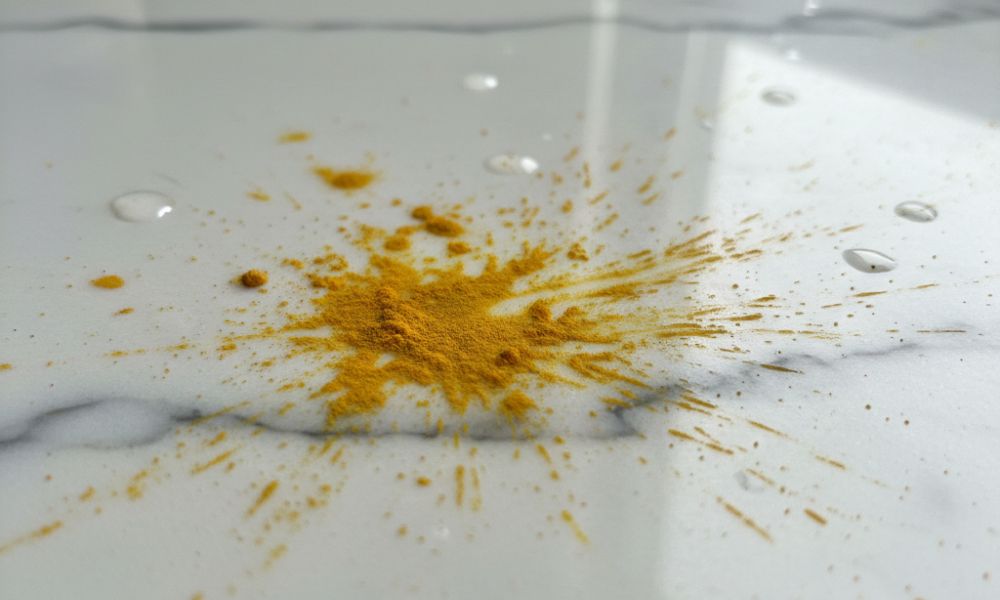
Both quartz and sintered stone are remarkably non-porous, meaning they don’t absorb liquids like natural marble or some types of granite do. Whether it’s spilled coffee, curry gravy, dragon fruit juice, or beetroot, the stain primarily sits on the surface rather than soak into the material itself.
While both are excellent at resisting stains, sintered stone boasts near-zero porosity, making it exceptionally resilient. If you accidentally leave a turmeric stain or a red wine spill overnight, sintered stone is slightly more forgiving to the use of harsher chemical cleaners like bleach or Cif, should they be needed for a difficult stain. However, excessive scrubbing with abrasive chemicals, can eventually dull the polished finish of certain quartz brands over many years.
The Durability Factor: Scratches and Chips
Malaysian kitchens are high-traffic, high-activity zones. Between heavy grocery bags, robust meat cleavers, and clanging stainless steel tiffins, the countertop surface needs to take a beating.
Scratch resistance
Sintered stone is virtually unscratchable. Its extreme hardness means you could technically chop your onions directly on the surface without fear of scratching the stone (though we never recommend this, as it will dull your expensive knives instantly). Quartz is also highly scratch-resistant but sits slightly lower on the Mohs Hardness Scale compared to sintered stone.
Impact resistance
This is where quartz often has a slight edge. Because quartz contains resin, it has a tiny bit of flex or elasticity. If you accidentally bang a heavy cast-iron pot or a ceramic plate against the edge of a quartz counter, it’s generally less likely to chip. Sintered stone, being much more rigid and glass-like in its density, can be more brittle on exposed edges. While incredibly hard, a sharp, heavy impact directly on a fine edge can cause a chip.
To mitigate the risk of chipping in sintered stone, discuss with your contractor options for a pencil edge or rounded edge profile instead of a sharp 90-degree mitered join. These softer edge profiles are less susceptible to impact damage.
UV Stability: Wet Kitchens & Balconies
Do you have an outdoor wet kitchen, a laundry area with a countertop, or a dry kitchen that sits right next to a large sliding glass door, exposed to direct sunlight?
Sintered stone is 100% UV resistant. The colours will not fade, yellow, or chalk even under the harsh, prolonged Malaysian afternoon sun. This makes it ideal for outdoor applications or areas with strong natural light.
As for quartz, direct sunlight causes the resin in quartz to break down over time. This can lead to a noticeable yellowing, fading of colour, or a chalky appearance. For any area that receives prolonged exposure to direct sunlight, sintered stone is the clear winner.
Quartz vs Sintered Stone: Which One is Right for You?
Ultimately, there is no bad choice between quartz and sintered stone. There is only the right choice for your specific lifestyle, cooking habits, and budget.
Choose quartz if you have a moderate budget, desire a specific veined marble or uniform solid colour aesthetic, primarily use your dry kitchen for light to moderate cooking, and are diligent about using trivets for hot items.
Choose sintered stone if you are a serious cook who needs ultimate heat and scratch resistance, demand absolute durability for a wet kitchen or outdoor area, prioritize cutting-edge technology, and view your countertop as a long-term investment where a higher price point is justified.
Are you ready to transform your kitchen? Stop guessing and start designing your dream kitchen. Our experts at Aurastone understand the nuances of the Malaysian climate and cooking styles, ensuring you get the right countertop solution tailored to your needs.