A kitchen renovation is a significant investment, and it’s natural to want to stretch the lifespan of your materials. But like any high-traffic tool in the home, countertops have an expiration date. While a minor scratch on a quartz top or a dull spot on marble can be buffed away, some issues signal that the core of the material has failed.
If you are noticing any of the following signs in your terrace home or condo, it’s time to stop looking for hacks and start looking at new slabs.
1. Deep Structural Cracking (The Through-Slab Fracture)
There is a big difference between a hairline scratch and a structural crack. A surface scratch is a cosmetic blemish, but a through-slab fracture is a structural failure that signifies the death of a countertop. In Malaysia, these cracks often appear near stress points, i.e. the corners of the sink cut-out or the narrow strip of stone in front of the hob.
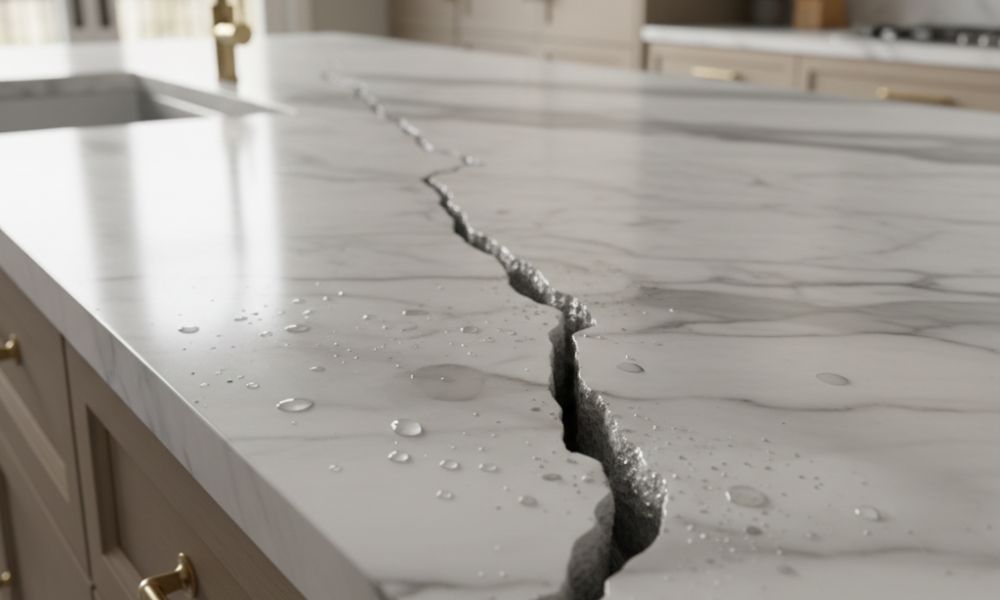
If you can fit a fingernail into the crack, or if the crack extends from the front edge all the way to the backsplash, the slab’s integrity is compromised.
Often, this is caused by cabinet sagging due to humidity or termite damage in the base units. When the cabinets shift, the stone, which is rigid, simply snaps.
You can fill the crack with epoxy, but because the underlying structure is unstable, the crack will simply reappear or widen, eventually leading to a dangerous collapse of a heavy stone section. Unlike a chip, which can be filled with color-matched resin, a structural crack goes entirely through the thickness of the stone. If you can feel the crack on the underside of the slab, it is no longer one piece of stone but two pieces “floating” next to each other.
Most cracks in Malaysian homes aren’t caused by dropping a heavy pot. They are caused by cabinet movement. As our high humidity causes wooden cabinets to swell or sag, the stone is left unsupported. Stone has high compressive strength but very low flexural strength. If it bends even a fraction of a millimeter, it snaps.
Replacement verdict: Attempting to glue a through-crack is a temporary fix. As the house continues to settle or the cabinets continue to shift, the stone will snap again. Worse, these cracks are dirt traps that collect raw meat juices and bacteria that you can never fully clean out.
2. Water Infiltration and Cabinet Delamination
In our wet kitchen culture, water is everywhere. If your countertop was poorly installed or the sealant has failed, water will find its way under the stone. Water infiltration is a silent killer of Malaysian kitchens. It usually starts at the sink rim or the backsplash joint where the silicone has dried up and cracked.
Look at the wooden cabinets directly under your sink. Are the doors warped? Do you see “mushrooming” (swelling) of the plywood?
If water is rotting your cabinets, the countertop is no longer safely supported. Furthermore, the damp space between the stone and the wood is a breeding ground for black mould and cockroaches.
Replacing just the cabinets while keeping the old, heavy stone is nearly impossible without breaking the stone. A full system replacement is usually the only hygienic solution. In Malaysia, many kitchen cabinets are made of melamine or plywood. When water seeps under the countertop, these wood fibres absorb it like a sponge, causing them to expand in a process contractors call “mushrooming” or delamination.
Once the wood base expands, it loses its ability to hold the weight of the heavy stone. We are seeing more cases of dropped sinks, where the wood around the sink area has become so soft that the sink literally detaches from the stone.
Replacement verdict: You cannot simply wipe away water damage inside wood. If the cabinets are mushy, the stone above them is a safety hazard. Replacing the whole system allows you to install sintered stone, which is 100% waterproof and won’t be affected if a leak occurs in the future.
3. Persistent Cloudiness and Chemical Burn (Etching)
Cloudiness is often mistaken for a stain, but in reality, it is a change in the stone’s physical texture. This is a particularly common issue with low-grade quartz and natural marble in Malaysian households.
You’ve tried every cleaner, every baking soda hack, and every YouTube trick, but the stone still looks foggy or has white rings that won’t vanish. This isn’t dirt, but a permanent chemical change. On marble, it’s acid etching from acidic substances like lime or vinegar. On quartz, it’s resin burn from harsh chemicals or hot pans.
Professional re-polishing can cost 40-60% of the price of a new slab. If the damage is widespread across the entire counter, investing that money into a modern, more durable sintered stone top is a much better long-term financial move.
Marble is made of calcium carbonate. When it meets acid (lemon, vinegar, asam jawa), a chemical reaction occurs that dissolves the top layer of the stone. This creates a dull spot that feels rough to the touch.
In quartz, cloudiness often comes from using harsh chemicals like bleach or concentrated degreasers. These chemicals eat the resin binder, leaving the quartz crystals exposed and looking white or foggy.
Replacement verdict: While a professional can sometimes re-polish the stone, this process involves grinding down the surface, which is messy, dusty, and expensive. If your countertop is covered in white rings and dull patches, it has lost its protective factory seal. A new, acid-resistant sintered stone top is the only way to get that mirror-shine back permanently.
4. The Old School Aesthetics (The Resale Factor)
The Malaysian property market is highly competitive. When a potential buyer visits the unit, the kitchen is often the decision room. If you are planning to sell your home, an outdated kitchen is the number one deal-breaker. Whether you are in a terrace house in Petaling Jaya or a luxury condo in KLCC, an outdated kitchen can slash your property value by tens of thousands of Ringgit.
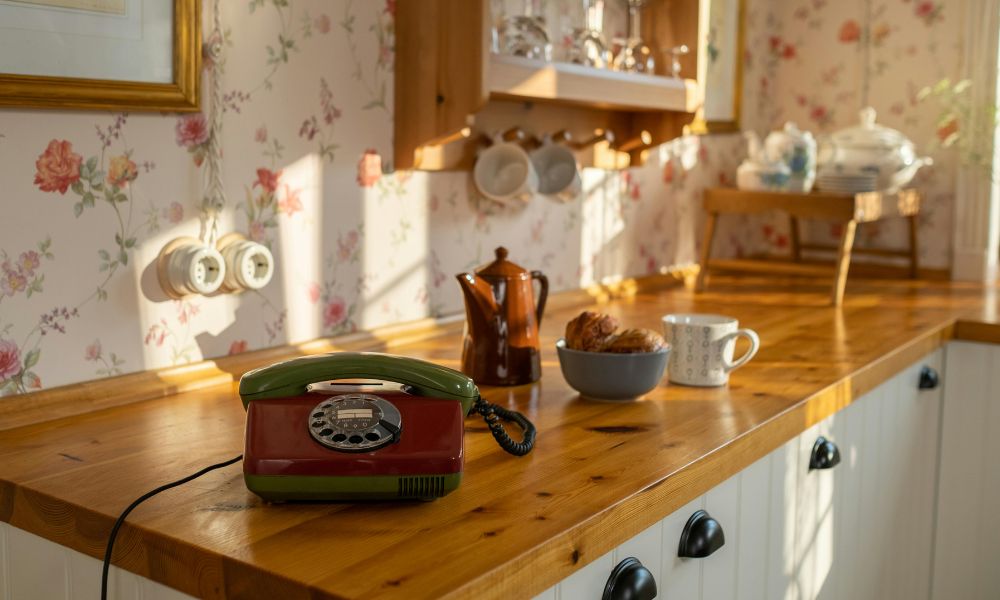
Do you still have 4×4 tiles with thick, stained grout lines, or an old-fashioned speckled granite that makes the kitchen look dark and small? It’s time to upgrade to a modern, thin-profile Japandi-style quartz or a marble-look sintered stone can increase your home’s valuation significantly. Buyers today view a ready-to-move-in kitchen as a premium feature, saving them the headache of their own renovation.
Many older Malaysian homes still have 4×4 or 8×8 tiled countertops. These are an red flag for buyers. They associate tiles with unhygienic grout and cheap construction.
Furthermore, old-fashioned, dark, heavily speckled granite makes a small kitchen feel claustrophobic. Modern design favours continuous veining, which is the look of a single, massive piece of marble.
Replacement verdict: Replacing a 15-year-old countertop with a modern premium quartz top provides an ROI (Return on Investment) of nearly 1:1. It is the fastest way to make an old house feel like a new build, making it a strategic move if you plan to sell or rent out the unit.
5. Visible Mould Colonies in the Seams
Hygiene is the most critical reason for a replacement. In our 90% humidity, mould isn’t just on the surface, it lives within the installation.
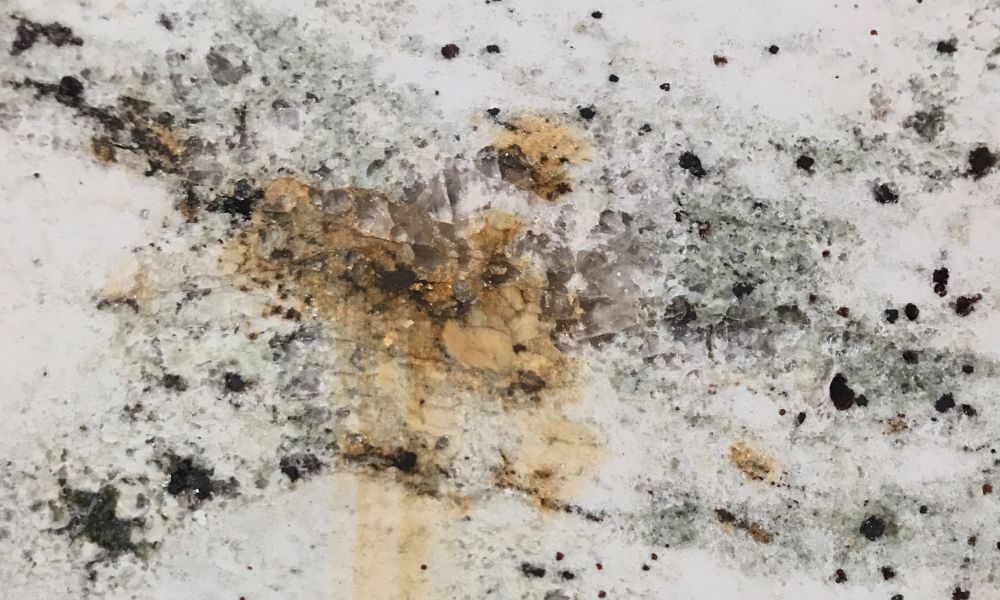
When you see black spots appearing inside the stone’s seams or around the sink, and no amount of scrubbing with bleach removes them, it has likely penetrated the porous substrate or the filler used in the joints. In Malaysia’s heat, these mould spores release into the air every time you cook.
Modern sintered stones are nearly 0% porous, meaning mould literally cannot grow inside the material. Switching to a non-porous surface is a direct investment in your family’s respiratory health.
If you have low-grade stone or old, cracked grout, mould spores settle into the microscopic crevices. Once they are inside the stone or the adhesive, no amount of bleach will kill the colony. It will keep growing back every two weeks. Medical awareness around Sick Building Syndrome is high. These spores are released into the air every time you cook or wipe the counter, contributing to chronic sinus issues and asthma in children.
Replacement verdict: If you can see black mould rooted into the seams or behind the sink that won’t go away, your kitchen is technically contaminated. Replacing it with a non-porous sintered stone ensures a 100% hygienic environment, as these materials have zero pores for mould to take root in.
Conclusion: Get a Kitchen Countertop Replacement and Stop Throwing Good Money on Bad Repairs
If your countertop shows any of these five signs, a repair is merely a temporary bandage on a permanent problem. Continuing to pay for professional polishing or epoxy filling is a sunk cost.
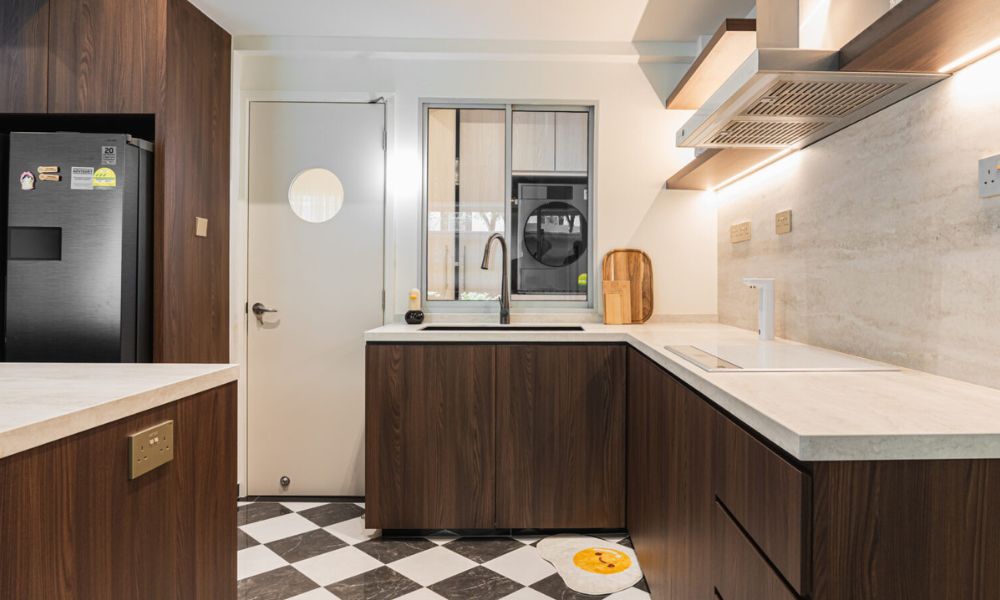
New materials like sintered stone and high-grade quartz have become more affordable and significantly more durable than the materials used 10 years ago. Replacing your countertop now ensures a hygienic, safe, and beautiful heart of the home for the next two decades.