If your idea of cooking involves more than just heating up frozen meals, you know that a Malaysian kitchen is a battlefield. Between the high-heat searing required for the perfect char kway teow, the vigorous pounding of belacan in a stone mortar, and the turmeric-heavy gravies that seem to stain everything they touch, your countertop needs to be more than just pretty. It needs to be indestructible.
The definition of a durable countertop has evolved over the years. It’s no longer just about avoiding a crack. A heavy-duty countertop is all about heat resistance, stain immunity, and impact strength. If you are a hardcore home chef, here are the top 5 materials ranked by their ability to handle the heat of our Malaysian kitchens.
1. Sintered Stone: The Heat-Proof Powerhouse
Sintered stone is a feat of modern engineering. Brands like Dekton and Aurastone’s Mysa have pushed the boundaries of what a surface can survive. As such, sintered stone has officially grabbed the top spot for heavy-duty cooking in 2026.
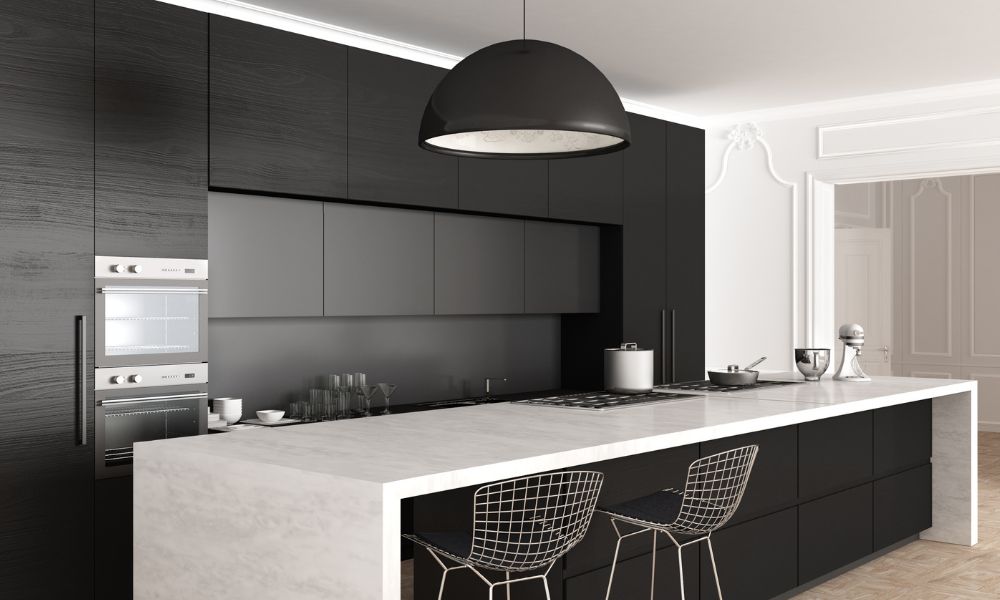
The most significant advantage of sintered stone is its thermal shock resistance. In a typical Malaysian wet kitchen, we often move a hot wok directly from the gas hob to the counter. While quartz might crack or scorch under this stress, sintered stone is born in a furnace at 1,200°C, making it practically immune to heat.
Unlike quartz, which uses resin as glue, sintered stone is made of 100% natural minerals (quartz, feldspar, and oxides) that are subjected to 10,000 tons of pressure and fired at temperatures exceeding 1,200°C. This process, called metamorphism, mimics how stone is created over millions of years in just a few hours.
Because there are no resins to melt, sintered stone can withstand temperatures up to 250°C to 300°C in daily use without cracking or scorching. For a Malaysian home, this means you can take a sizzling claypot or a hot cast-iron kuali and place it directly on the surface.
New manufacturing techniques have made sintered stone nearly zero-porosity (absorption rate <0.05%). This makes it impervious to the most aggressive Malaysian stains like dark soy sauce and red chili oil. Even turmeric wipes right off!
So, if you do heavy frying and want a surface that will never melt, burn, or yellow, then sintered stone countertops are best.
2. Natural Granite: The Traditional “Tahan Lasak” King
Before engineered stones existed, there was granite. Granite is a natural igneous rock, making it incredibly hard. It handles the pounding of a mortar and pestle better than almost any other material. It is also naturally heat-resistant. For homeowners who value impact resistance granite is often the only natural stone that can keep up.
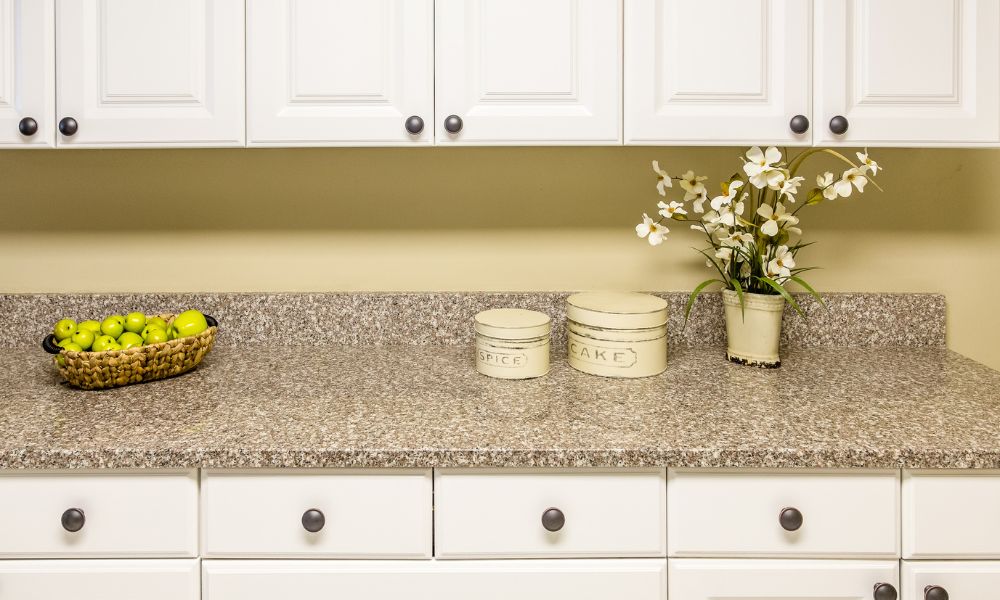
On the Mohs scale of mineral hardness, Granite sits at a 6 or 7 (Diamond is 10). This makes it harder than the steel in your kitchen knives. While we don’t recommend it, you could technically chop your pandan leaves directly on the stone without leaving a mark.
Because Granite is an igneous rock formed from cooled magma, it has an interlocking crystalline structure. This makes it incredibly dense and heavy, allowing it to absorb the mechanical vibrations of heavy pounding (like making sambal belacan) without the slab flexing or cracking.
Because it is a natural stone, granite is slightly porous. If you don’t seal it annually, that curry splash could become a permanent part of your kitchen’s history.
To keep it heavy-duty, natural granite must be sealed every 12-24 months. Without sealing, its porous nature can lead to oil darkening around the stove area.
The granite countertop is best for those who prioritize impact resistance and want a 100% natural, unique look that can take a literal beating.
3. Large-Format Porcelain Slabs: The Modern Evolution
Remember the 2×2 tiles our grandmothers used? They were durable, but the grout lines became black and greasy within months. Modern porcelain slabs offer the same indestructible qualities but in a single 3-meter sheet with zero grout lines.
Often confused with sintered stone, modern porcelain slabs are the upgrade to the old-school tiled countertop.
Porcelain is fired at even higher temperatures than standard ceramic, making it denser and less likely to chip. In the large-format 2026 versions, these slabs can exceed 3 meters in length, allowing for a seamless, grout-free wet kitchen.
One of the biggest threats to a Malaysian kitchen is acid, think: tamarind, vinegar, and lemon. Porcelain is chemically inert, meaning it will never etch or lose its shine when exposed to acidic ingredients or even harsh industrial degreasers.
Despite being as thin as 6mm to 12mm, the flexural strength of modern porcelain is high enough to handle heavy kitchen appliances without sagging.
Porcelain slabs are perfect for wet kitchens where hygiene and easy wipe-down cleaning are the top priorities.
4. High-Grade Polished Quartz: The Stain-Fighting Hybrid
While quartz is engineered, not all quartz is created equal. For heavy-duty use, a polished finish is essential for the Malaysian palate. Polished quartz is specifically sealed at the factory to be non-porous. Brands like Caesarstone have perfected stain-shield technology that makes their surfaces essentially waterproof.
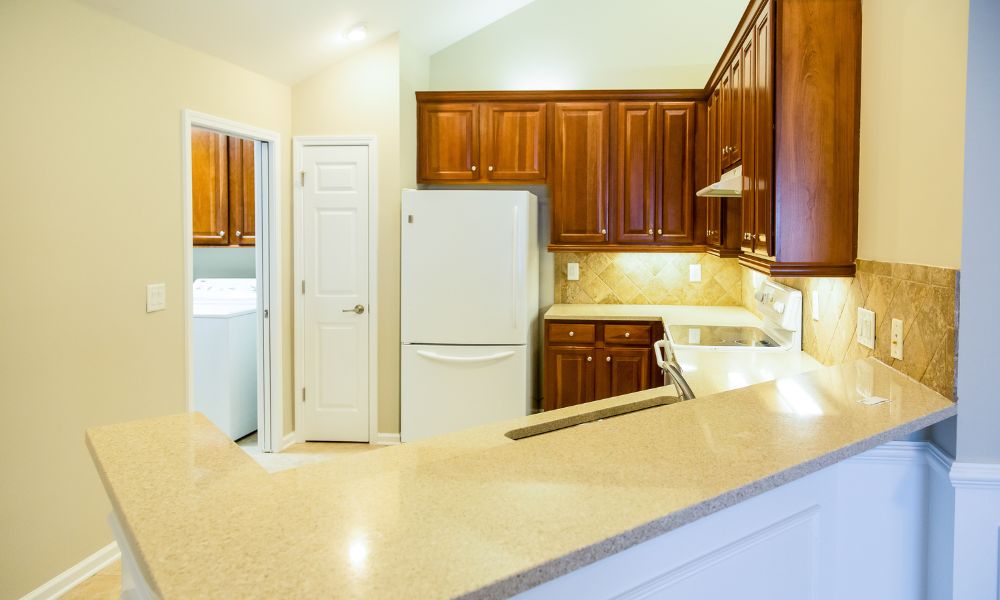
All quartz is non-porous, but the polished finish adds an extra physical layer of protection. High-end polished quartz (like Caesarstone or Silestone) is so smooth that liquid molecules, like those in coffee or turmeric water, simply cannot find a grip on the surface.
In our humid climate, honed (matte) quartz can sometimes show oil ghosts from fingerprints or frying splatters. Polished quartz reflects these away, making it much easier to keep your dry kitchen looking pristine with just a quick wipe of a damp cloth.
It offers a 93% mineral content for hardness, but the 7% resin gives it enough give that it is less likely to chip than the more brittle sintered stone if you accidentally drop a heavy plate on the edge.
Unlike sintered stone, you cannot put a hot pan directly on quartz. The resin will burn. However, for a dry kitchen where you do heavy food prep (chopping, marinating, kneading dough for roti canai), it is unmatched.
Quartz countertops are best for prep-heavy kitchens where staining is a bigger concern than direct fire/heat.
5. Stainless Steel: The Commercial Choice for Home
Once reserved for mamak stalls and hotel kitchens, stainless steel countertops are making a massive comeback in Malaysian residential industrial-style designs. It is the only material that is truly indestructible. You can’t crack it, you can’t stain it, and you can’t burn it. It is also the most hygienic surface for handling raw meat and seafood.
The industrial-chic look is booming in Malaysian interior design. Stainless steel is no longer just for the back of a restaurant; it’s a luxury residential statement. In the residential market, there is Grade 304 stainless steel, which contains high levels of chromium and nickel. This makes it virtually rust-proof, even in our high-humidity environment near the coast.
Stainless steel is the only material on this list that is non-reactive and completely non-porous. Bacteria have nowhere to hide. This is why it’s the top choice for homeowners who prepare a lot of raw seafood or poultry.
It cannot be burnt by a hot pan, it cannot be stained by kunyit, and it will never crack. While it will develop a patina of fine scratches over time, this is often seen as a mark of a working kitchen.
However, the trade-off is that it will scratch. Over time, these scratches develop a patina, but if you hate the look of a used surface, this isn’t for you. It can also be noisy when you’re preparing food.
Stainless steel countertops are suited for the professional home cook who prioritises utility and hygiene over a stone aesthetic.
Summary: Which Countertop Should You Buy?
To help you decide, we’ve created a Chef’s Choice matrix based on common Malaysian cooking habits:
| If You: | Your Best Material |
| Do a lot of heavy wok frying | Sintered stone |
| Use a mortar & pestle (lesung) daily | Natural granite |
| Cook lots of turmeric/curry dishes | Polished quartz / Porcelain / Sintered stone |
| Have an outdoor wet kitchen | Sintered stone (UV Proof) |
| Want a commercial/industrial vibe | Stainless steel |
Final Advice for Durable Countertops: Don’t Forget the Base
A durable countertop is only as good as the cabinets beneath it. For heavy stone like granite or sintered stone, ensure your kitchen carcasses are made of aluminium or High-Pressure Laminate (HPL) rather than cheap chipboard, which can sag under the weight over time.

Are you planning a heavy-duty kitchen renovation? Aurastone specializes in high-performance installations that withstand the rigours of Malaysian cooking. Contact us today to see samples of our sintered stone and quartz collections.