If you live in a Malaysian terrace house, semi-D, or a modern condo, you are likely familiar with the split kitchen concept. This uniquely Southeast Asian architectural layout of separating the dry kitchen (the heart of the home) from the wet kitchen (the engine room) is a brilliant solution to our love for heavy, aromatic cooking.
However, a common mistake many homeowners make is using the same countertop material for both zones. While it might look uniform, it’s often a waste of money or, worse, a recipe for a renovation disaster. The needs of a dry kitchen (aesthetics, social interaction, light prep) are vastly different from the needs of a wet kitchen (heavy frying, steam, and water splashes).
Here is the definitive guide on how to mix and match materials to get the best of both worlds: durability where you need it, and luxury where you show it off.
Wet Kitchen
The wet kitchen is where the real work happens. It’s where you fry fish, pound sambal belacan, and boil large pots of soup. This area is subject to high heat, high humidity, and potential impact.
In the wet kitchen, durability isn’t just a preference, it’s a requirement. This area faces the “Big Three” threats of Malaysian cooking: High heat (Wok-hei), Heavy impact (Pounding), and High acidity (Tamarind/Vinegar).
Best Materials for the Wet Kitchen:
1. Sintered Stone
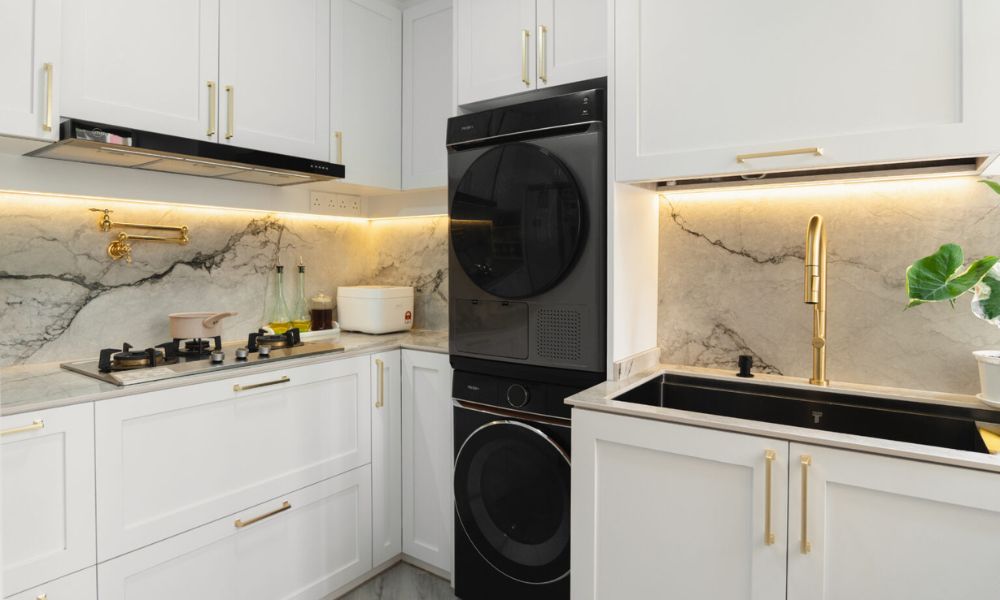
Sintered stone is the only man-made material that is 100% wok-safe. While quartz can handle about 150°C, sintered stone is forged at 1,200°C. You can move a hot cast-iron skillet directly onto it without fear of thermal shock or yellowing.
Because it is non-porous and ultra-dense, it resists the grease film that often builds up in wet kitchens. It is also highly resistant to harsh chemicals, meaning you can use strong degreasers to clean up after a heavy deep-frying session.
Look for brands that offer through-body patterns so that if you ever do get a minor chip from a heavy cleaver, the colour underneath matches the surface.
2. Natural Granite
Granite remains the king of impact resistance. If you use a stone mortar and pestle daily, granite is your safest bet. It is a solid block of natural stone that absorbs vibrations better than thinner engineered slabs.
We recommend leathered or honed finishes for wet kitchens. Unlike polished granite, these finishes don’t show water spots or fingerprints as easily, which is essential in a splash-heavy environment.
Natural granite must be sealed every 12-18 months to stay stain-proof against heavy curry oils and natural food pigments.
3. Porcelain Slabs
Porcelain slabs are a slightly more budget-friendly way to get high heat resistance. They are incredibly thin (often 6mm to 12mm), which makes them great for overlaying on old tiles during a quick renovation.
Because they are thinner, they can be more brittle on the edges. Ensure your installer uses a mitred edge with a reinforced backing to prevent cracking from heavy pots.
No-Go Wet Kitchen Materials
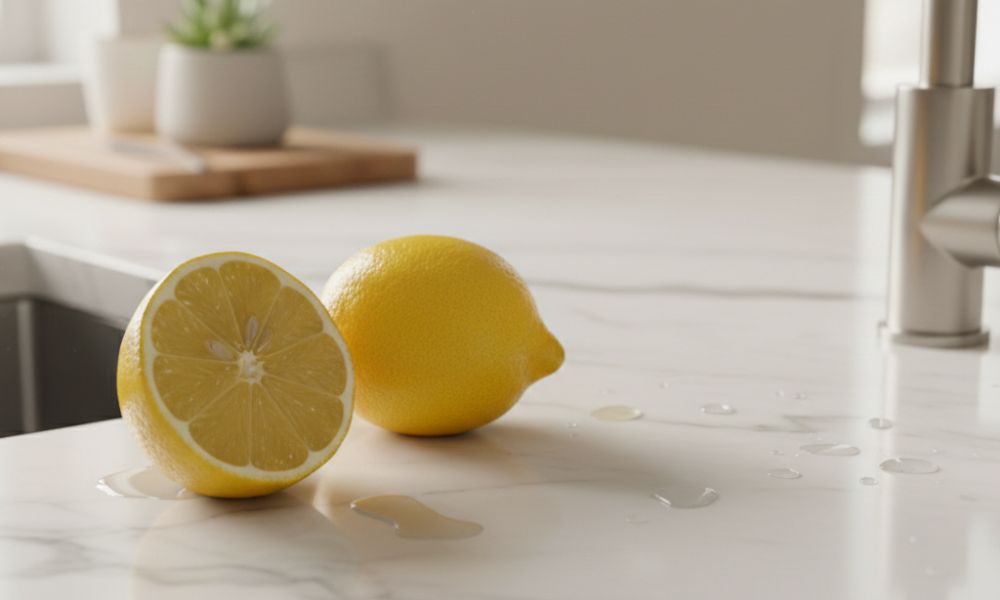
Avoid marble or low-grade laminates for the wet kitchen. The acid from lime juice or tamarind will etch marble instantly, and the high humidity will cause laminate wood to swell and rot within a few years.
Dry Kitchen
The dry kitchen is often part of the living or dining area. It’s where you make coffee, toast bread, or display a fruit platter. You can also use it as a breakfast bar, a workspace, and a buffet table for guests. This is a social space, so aesthetics and feel are the priority.
In modern Malaysian open-concept homes, the dry kitchen is your home’s first impression.
Best Materials for the Dry Kitchen:
1. Premium Quartz Stone
Quartz is perfect for achieving that high-end, veined marble look without the high maintenance of real marble. Since you aren’t doing heavy frying here, the resin’s heat sensitivity isn’t an issue.
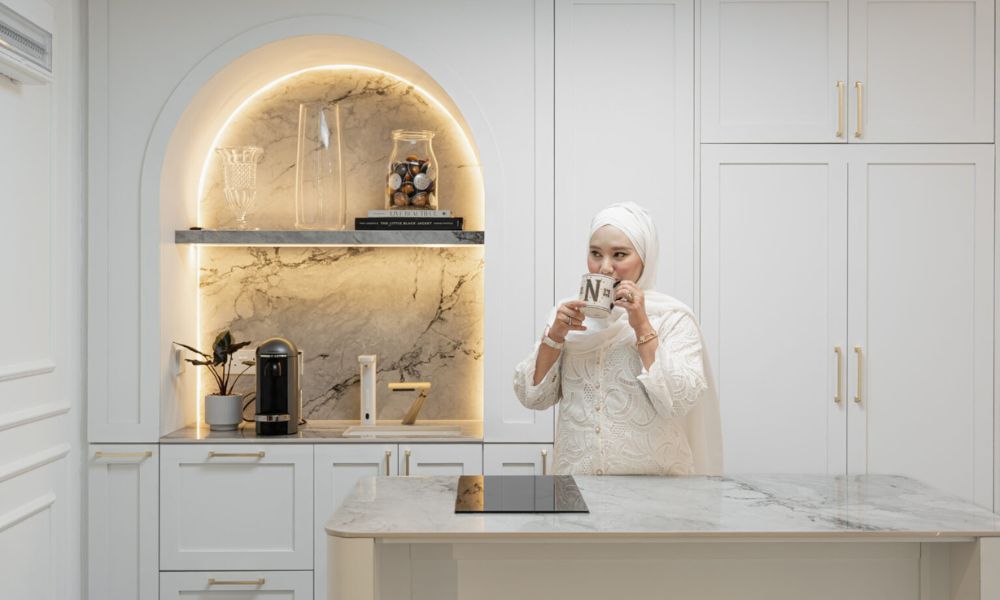
In terms of performance, quartz is the gold standard for dry kitchens because it offers the most consistent patterns. If you want a 3-meter island with a perfectly continuous Calacatta marble vein, quartz is easier to book-match than natural stone.
In a dry kitchen, you aren’t dealing with open flames or heavy oils. This allows you to use polished finishes that reflect your pendant lighting, creating a bright, luxurious atmosphere.
Jumbo slabs are the trend for 2026, allowing for massive islands without a single visible joint line.
2. Natural Marble
If you’ve always dreamed of Carrara or Statuario marble, the dry kitchen is the place for it. Since it won’t be exposed to heavy oils or spices, the risk of staining is much lower.
Marble is literally cool to the touch. This makes it a favourite for Malaysian home bakers who roll out pastry or roti dough.
However, there is a risk because marble is soft and porous compared to other heavy-duty stone countertops. In a wet kitchen, it would be ruined in a week.
In a dry kitchen where it is used for coffee and light snacks, marble is manageable. Don’t forget to use a gentle stone cleaner for daily cleaning to maintain that classic glow.
3. Solid Surface
Great for seamless, curvy designs. If you want a futuristic, integrated sink look, this is a budget-friendly way to get it.
Made from acrylic resins, solid surface (like Corian) is the only material that can be joined seamlessly. You can have a 5-meter counter where the sink is built into the stone with no visible gaps.
If your dry kitchen has a curved island or organic shapes (a huge design trend), solid surface is the only material that can be heat-moulded (thermoformed) into those shapes.
It is easily scratched, but unlike stone, you can simply sand it down to look brand new again.
The Strategy: How to Mix and Match
The trend is complementary contrast. You don’t want the two kitchens to look like they belong to different houses, but they don’t have to be identical.
Strategy A: The Colour Bridge
Use a premium quartz (white with grey veins) in the dry kitchen to match your living room’s luxury vibe. Then, use a solid grey sintered stone in the wet kitchen. The grey in the wet kitchen picks up the grey veins of the dry kitchen, creating a visual bridge.
Strategy B: The Texture Play
Use a polished quartz in the dry kitchen for that “Wow” shine under your pendant lights. For the wet kitchen, use a matte or leathered granite. The matte finish is much better at hiding water spots and light scratches from heavy pots.
Cost Optimisation: Spending Where it Counts
Once you have recognised the pros and cons of each kitchen countertop material, you can choose to either optimise your renovation costs or go all out to invest in both the wet and dry kitchens.
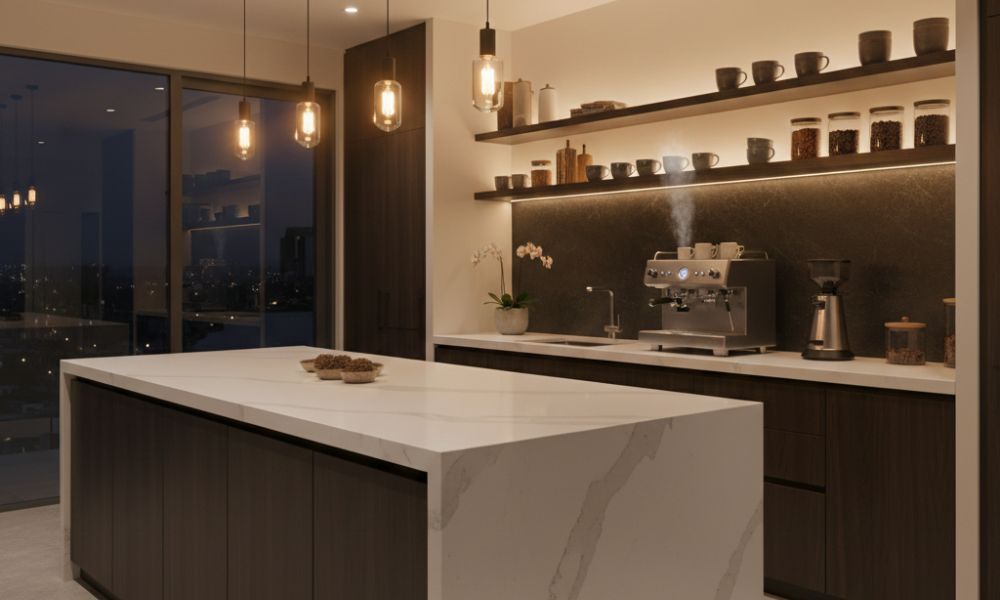
In most home renovation scenarios however, mixing materials is the smartest way to manage your renovation budget.
Invest in the Wet Kitchen
Spend more on a high-durability material (sintered stone/granite) for your wet kitchen. This place takes the most abuse. If this surface fails, you have to tear out your hobs and sinks to fix it, and this would be unpleasant.
Save in the Dry Kitchen
Since it’s mostly for light use and show, you don’t need the industrial-strength and thickness required for the wet zone. If your budget is tight, you can opt for a thinner quartz slab (12mm or 15mm) in the dry kitchen, and it will still serve its intended purpose beautifully.
Ventilation and the Door Factor
Regardless of the materials you choose, the transition between the two kitchens is vital.
Ensure the door between the wet and dry kitchen is airtight (usually a sliding glass door). This prevents oil particles from settling on your expensive dry kitchen surfaces.
In the wet kitchen, ensure your countertop has a water-drip groove (a small notch underneath the edge). This prevents water from the sink from flowing down and rotting your cabinet doors, a common problem in Malaysian homes.
Conclusion: A Kitchen Designed for Reality
Choosing different materials for your wet and dry kitchens isn’t just about saving money, it’s about designing for the reality of Malaysian life. By placing the heavy-duty materials where the heat is and the luxury materials where the guests are, you create a home that is both beautiful and functional.
Are you struggling to match the colours between your wet and dry kitchen? Our designers at Aurastone specialize in material pairing. We can provide you with samples of sintered stone and quartz that look beautiful together while serving very different purposes.